
Blog de Valentina Oropeza
“What Happens to Our Papers Now?”
“What happens to our papers now?”
After the midterm elections, that is the conversation among Venezuelan migrants in the U.S.: what will happen to their immigration status, and how exposed they are to deportation.
On Sunday 8, President Trump told 60 Minutes that his deportation policy “might be too tough.” Five days earlier, Democrats had won both chambers of Congress.
Here is how we got here:
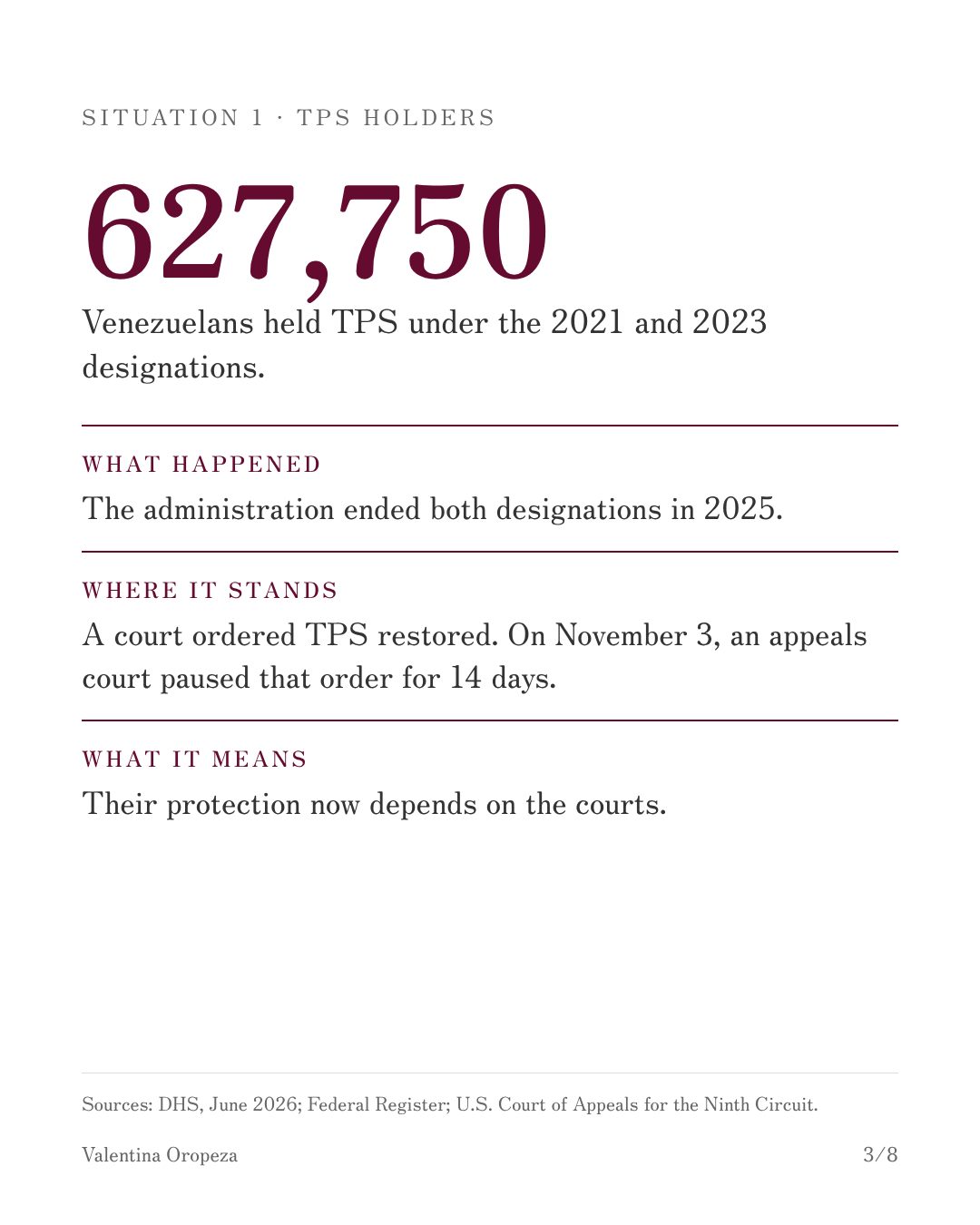
On February 5, 2025, the administration ended the 2023 TPS designation for Venezuela. On September 8, it ended the 2021 designation. Together, they had protected about 627,000 people.
On March 15, 2025, at least 252 Venezuelan men were flown to CECOT, a maximum-security prison in El Salvador under a 1798 wartime law. Most had no criminal record. On July 18 and 19, they were sent to Venezuela in a prisoner swap.
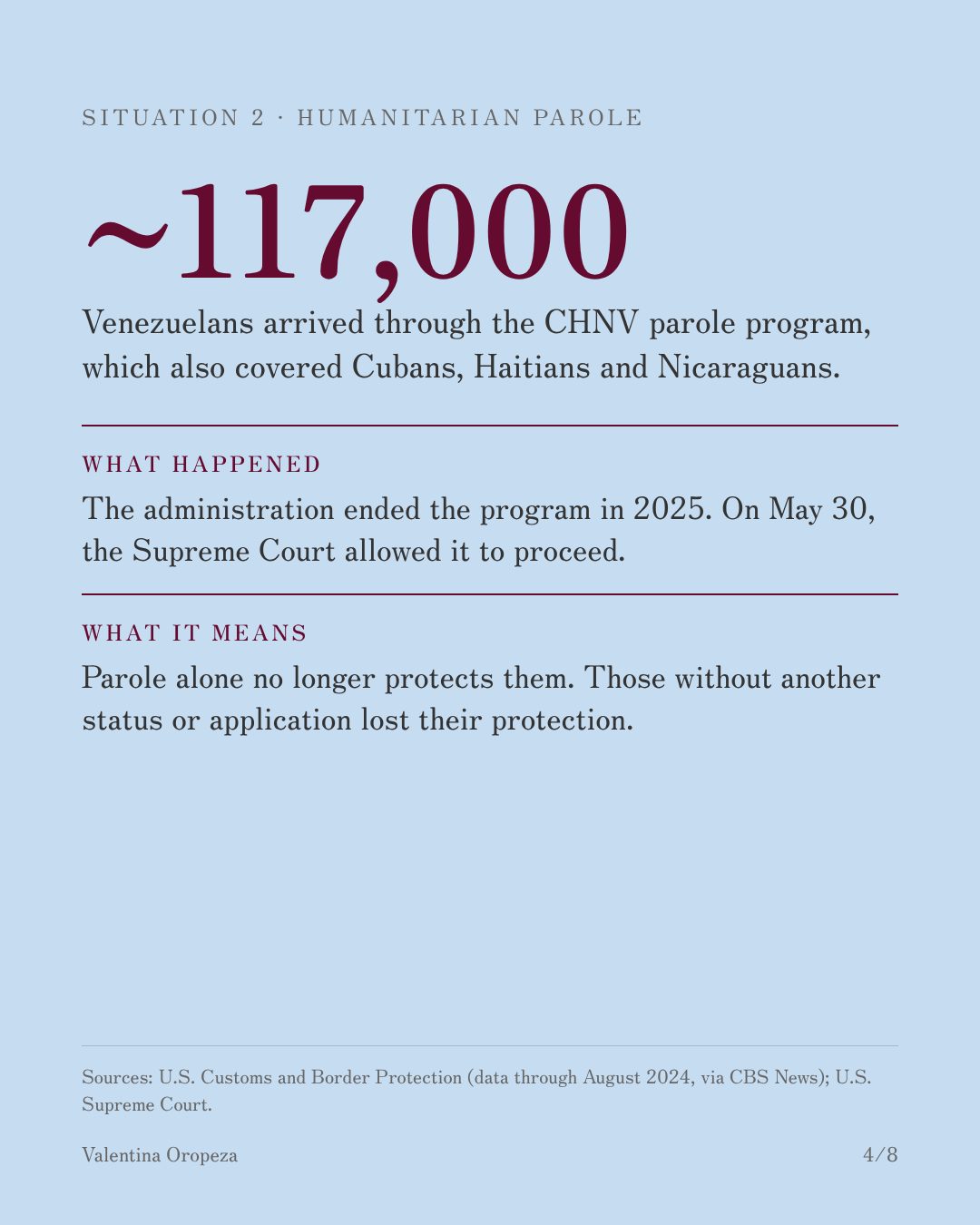
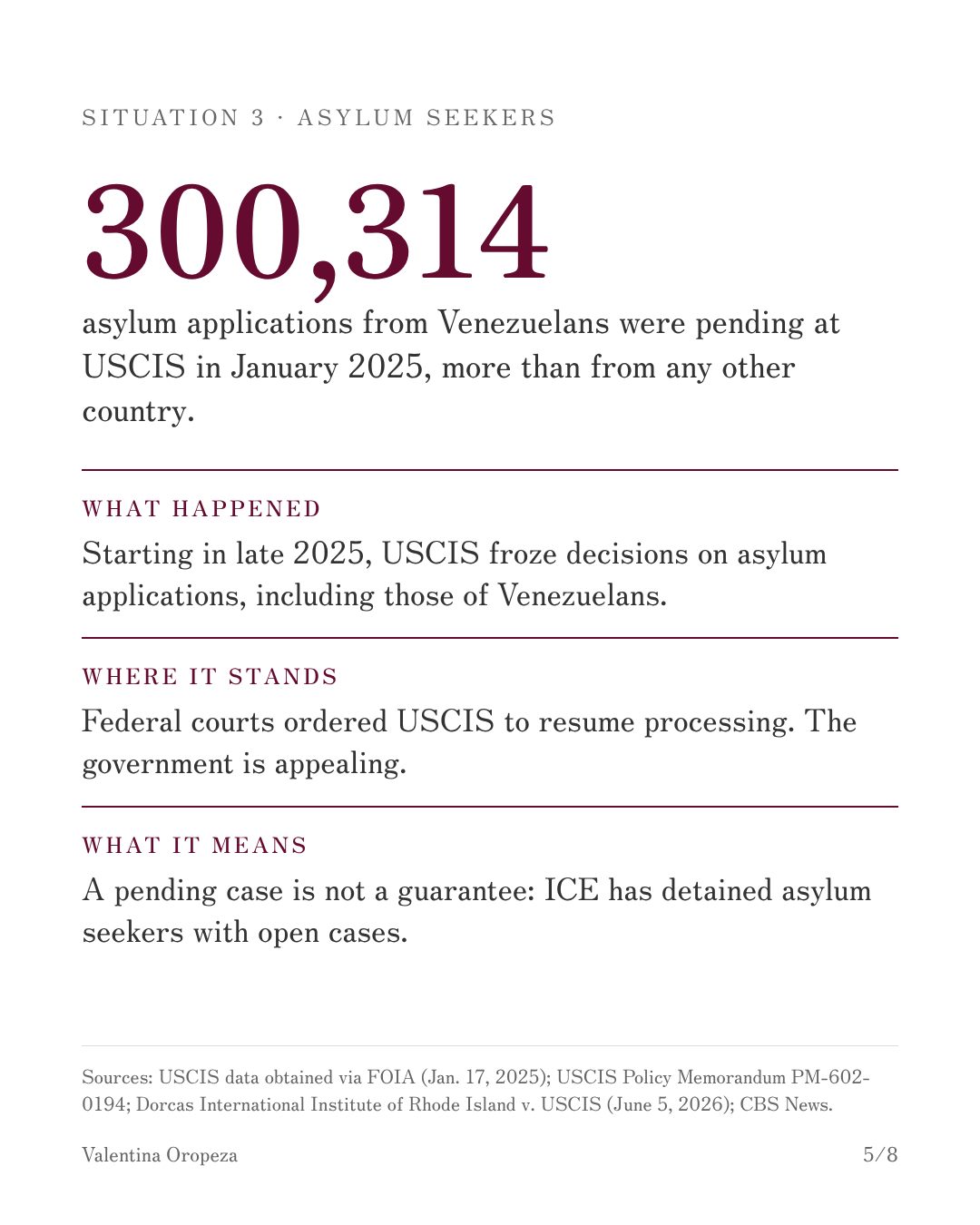
On May 30, 2025, the Supreme Court allowed the government to end humanitarian parole for 532,000 Cubans, Haitians, Nicaraguans and Venezuelans.
On January 3, 2026, U.S. military forces captured Maduro. Even though many Venezuelans celebrated, deportations continued. “The posture has not changed,” USCIS said.
On June 24, 2026, two earthquakes hit Venezuela. Deportation flights stopped and resumed in early August.
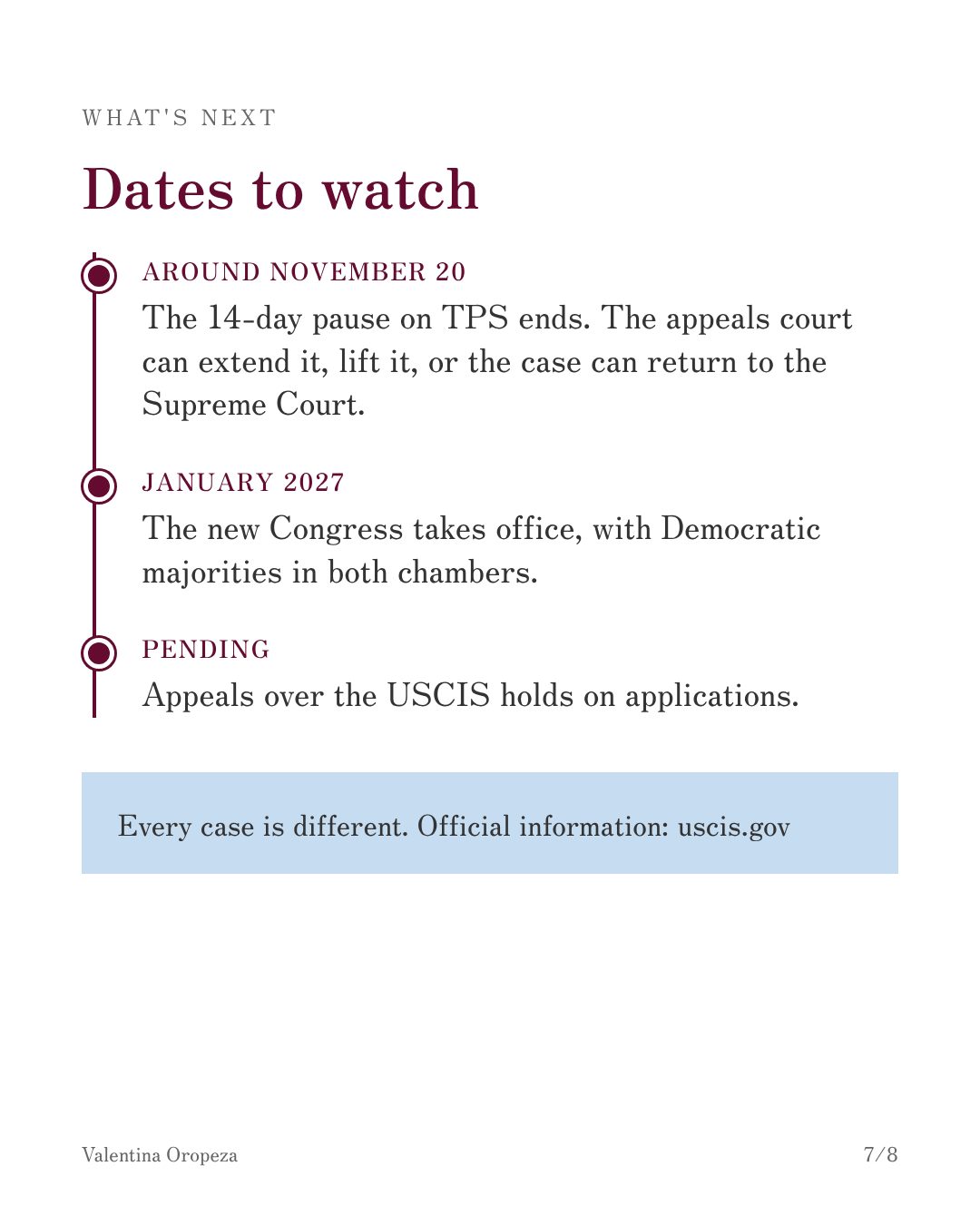
On November 3, 2026, a federal appeals court paused the restoration of TPS for 14 days, three days before it was set to take effect. Hundreds of thousands are waiting again.
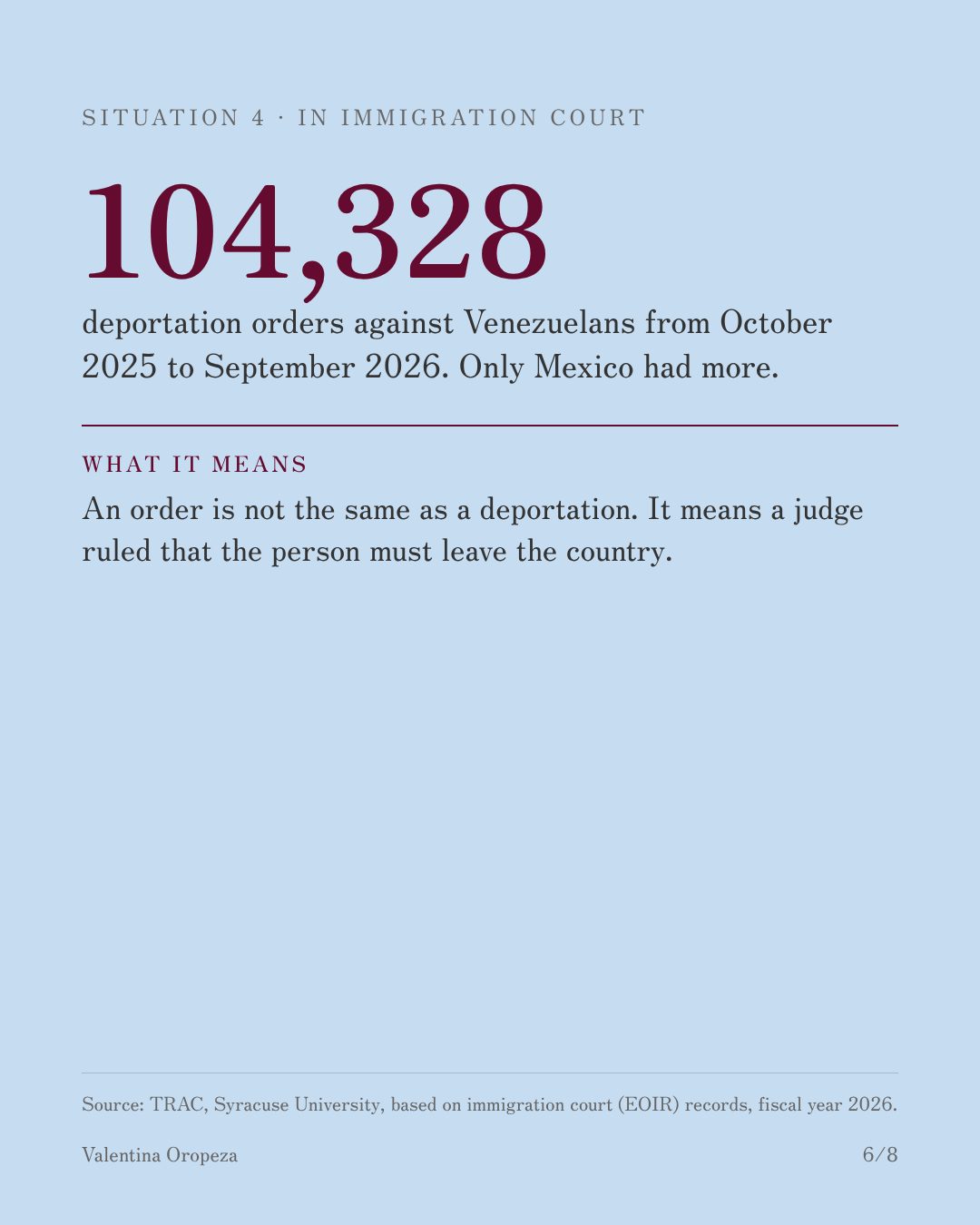
One number is missing from this story: how many Venezuelans have been deported. DHS does not publish deportations by nationality, and Venezuela’s government reports totals that don’t specify where the flights came from.
Then came the vote. About 6 in 10 Hispanic voters backed Democrats for the House. In Miami-Dade, the Senate race moved 19 points toward Democrats compared to 2024, even though Republicans still won Florida.
What can change now? Less than many hope, at least in the short term.
The new Congress starts in January. It can investigate DHS and ICE and use the budget as leverage.
A permanent fix, like the bipartisan Venezuelan Adjustment Act, needs 60 Senate votes and the President’s signature.
TPS will still be decided in court and by the administration.
Will the change in tone translate into a change in policy?
For now, many Venezuelans sum up the uncertainty in a phrase that helps them keep going: “Vamos a ver qué pasa”… We’ll see what happens.
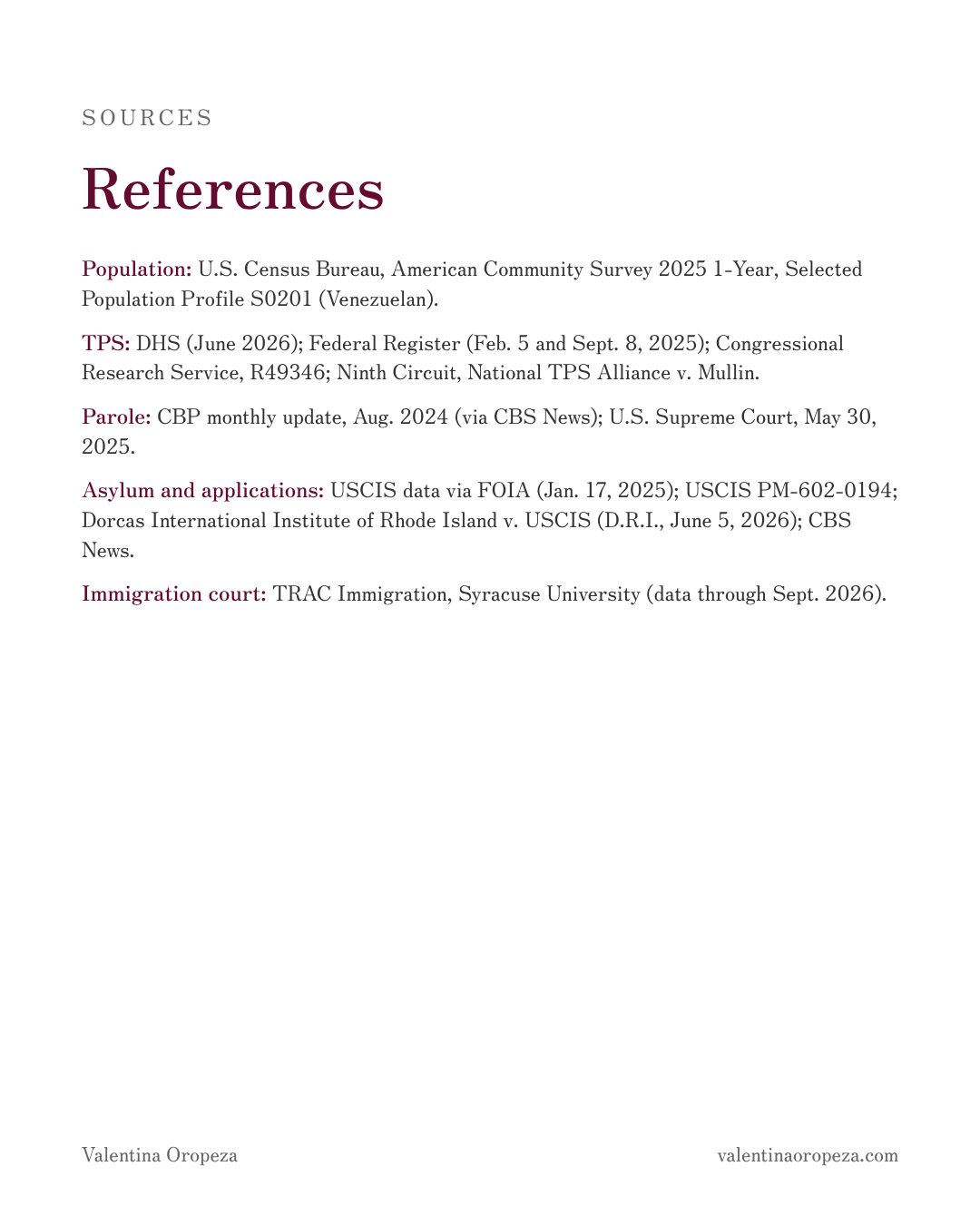
Sources (full list in the last slide of the document):